
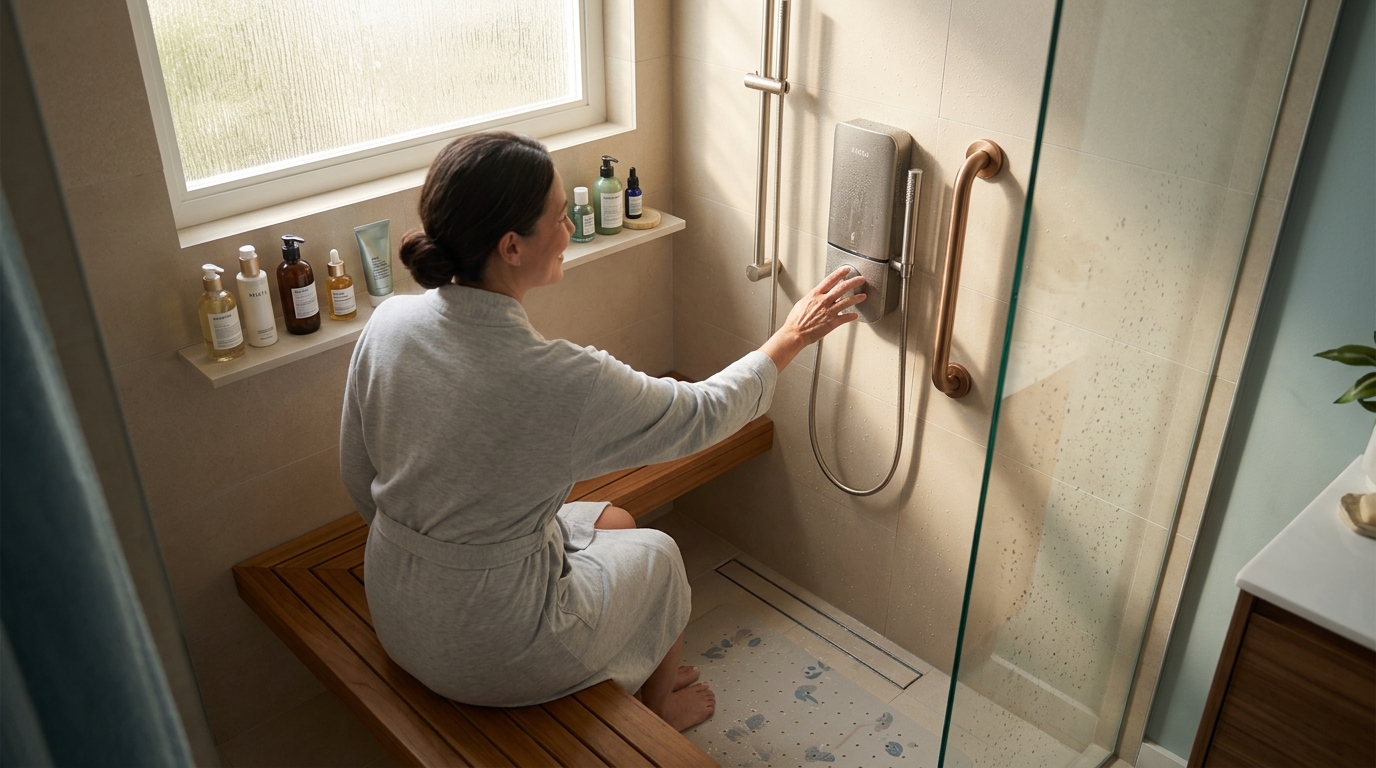
Choosing the right shower adaptive equipment can transform a stressful routine into a safe, independent experience. For beginners, the best options are simple, easy to install, and address specific physical challenges like grip strength or balance. This guide covers essential tools including shower chairs, grab bars, handheld showerheads, and non-slip mats. We also explain how modern infusion systems like the Mistu Shower Infuser can simplify product handling for those with limited mobility.
Shower Chairs
A shower chair is a specialized seat designed to provide stability and reduce fatigue during bathing. For beginners, selecting the right chair is often the first step toward independent showering. The primary benefit is the ability to sit while washing, which significantly lowers the risk of falls associated with standing on wet surfaces.
Types of Shower Seating
There are two main categories of shower seating: foldable plastic chairs and permanent bench installations. Foldable chairs are ideal for beginners because they are portable and do not require drilling into walls. They are lightweight and can be stored when not in use. Permanent benches, often made of teak or stainless steel, offer greater durability but require professional installation.
When choosing a chair, look for a weight capacity that exceeds your body weight by at least 20%. Ensure the legs have non-slip rubber feet to prevent sliding on wet tile. If you have limited leg mobility, a chair with a backrest and armrests provides additional support for standing up and sitting down.
Grab Bars
Grab bars are sturdy metal bars mounted to the shower wall to provide support and balance. They are a critical safety feature for anyone with reduced stability or balance issues. Unlike decorative towel bars, grab bars are engineered to support significant weight and are anchored directly into the wall studs or using specialized anchors.
Placement and Function
Strategic placement is key to maximizing the utility of grab bars. A vertical bar near the shower entrance helps with stepping in and out. A horizontal bar at waist height provides support while washing. For those who use a shower chair, a bar behind the seat allows for safe transfer from the chair to the standing position.
Beginners should start with a single vertical bar if they are unsure about their needs. This allows them to assess their comfort level before committing to a full installation. It is important to ensure the bars are installed at a height that aligns with your natural reach to avoid unnecessary strain on the shoulders.
Handheld Showerheads
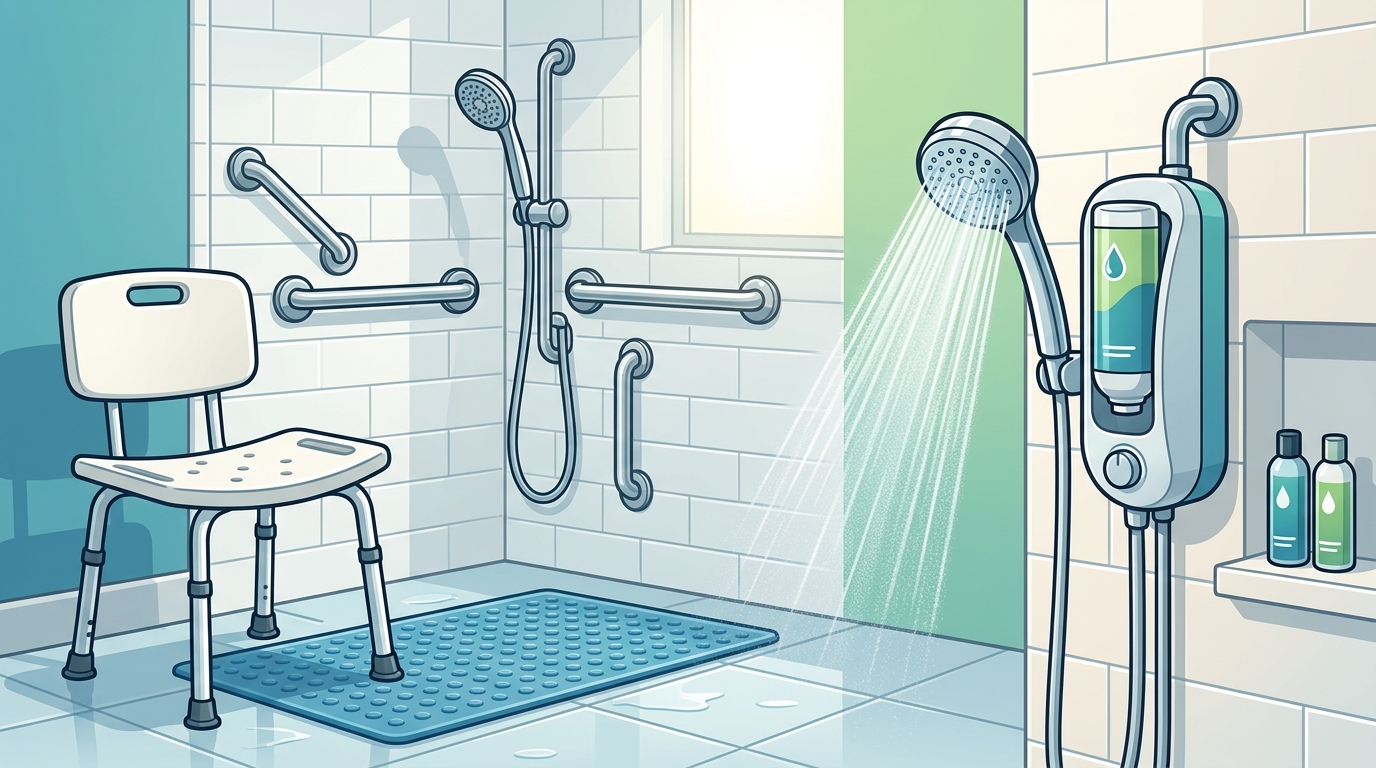
A handheld showerhead is a detachable nozzle that allows you to direct water flow precisely where needed. This adaptability is particularly useful for beginners who may struggle to reach certain areas of their body. By holding the showerhead, you can wash your back, legs, and feet without twisting or bending excessively.
Benefits for Limited Mobility
For individuals with arthritis or limited grip strength, a handheld showerhead with a large, easy-to-grip handle is essential. Many models include a suction cup holder or a wall bracket, allowing you to park the showerhead within reach. This eliminates the need to balance the unit in your hand while applying soap or rinsing.
Consider the weight of the showerhead as well. Heavy units can cause fatigue during a long shower. Lightweight models made from plastic or composite materials are often more comfortable for extended use. Ensure the hose is long enough to allow full range of motion without pulling or tangling.
Non-Slip Mats
Non-slip mats are floor coverings designed to increase friction and prevent slipping on wet surfaces. They are one of the most affordable and immediate safety upgrades for any bathroom. For beginners, a mat provides a psychological sense of security, knowing that the floor is stable underfoot.
Choosing the Right Mat
Look for mats made from durable, non-porous materials like rubber or PVC. These materials dry quickly and resist mold and mildew growth. The mat should have a textured surface to provide grip for both bare feet and wet shoes. Ensure the mat is large enough to cover the entire shower floor or the area where you will be standing.
Regular cleaning is crucial to maintain the effectiveness of non-slip mats. Rinse the mat after each use to remove soap residue and hair. Inspect the mat periodically for signs of wear or delamination, and replace it if the suction cups or texture become less effective.
Safety Installation
Proper installation of adaptive equipment is just as important as the equipment itself. Incorrectly installed grab bars or unstable chairs can create new hazards rather than preventing them. Beginners should approach installation with a focus on safety and compliance with local building codes.
Professional vs. DIY Installation
While some equipment like shower chairs and mats can be used immediately, grab bars require secure anchoring. If your shower walls are made of tile or glass, you may need a professional to ensure the anchors are correctly placed in the underlying studs or concrete. DIY installation is possible for drywall, but it requires the correct type of anchors and tools.
Before installing any equipment, assess your bathroom layout. Ensure there is enough space to maneuver with the new equipment. For example, if you are installing a shower chair, make sure there is room to open the shower door and move the chair without obstruction. A clear and uncluttered space is essential for safe movement.
Key Takeaways
- Shower chairs reduce fatigue and fall risk by allowing you to sit while bathing.
- Grab bars provide essential support for balance and safe transfers.
- Handheld showerheads offer flexibility for washing hard-to-reach areas.
- Non-slip mats are a low-cost, high-impact safety addition.
- Proper installation is critical to ensure equipment functions as intended.
- Consider the Mistu Shower Infuser to eliminate the need to handle bottles.
- Start with one or two items and adjust based on your comfort level.
Frequently Asked Questions
What is the most important adaptive equipment for a beginner?
For most beginners, a shower chair and a non-slip mat are the most important starting points. These two items address the primary risks of fatigue and slipping without requiring complex installation.
Do I need to drill into the wall for grab bars?
Yes, grab bars must be securely anchored to the wall structure. This usually involves drilling into studs or using heavy-duty anchors for tile or glass walls. Suction cup bars are not safe for supporting body weight.
How does the Mistu Shower Infuser help with adaptive showering?
The Mistu Shower Infuser infuses body wash or shampoo directly into the water stream. This removes the need to grip, open, or squeeze bottles, which is a significant barrier for people with limited mobility or dexterity.
Can I use a regular bench as a shower chair?
It is not recommended. Regular benches are not designed for wet environments and may become unstable or damaged by water. A dedicated shower chair is made from waterproof materials and has non-slip feet.
How often should I replace non-slip mats?
Replace non-slip mats when the texture wears down or the suction cups lose their grip. This typically happens every 6 to 12 months, depending on usage and cleaning frequency.
Is the Mistu Shower Infuser difficult to install?
No, the Mistu Shower Infuser is designed for easy, tool-free installation. It connects to your existing shower hose in minutes and does not require a plumber.
Conclusion
Adapting your shower for safety and independence is a manageable process when you start with the right equipment. By focusing on essential items like shower chairs, grab bars, and non-slip mats, you can create a safer environment for daily bathing. For those who find handling bottles difficult, the Mistu Shower Infuser offers a modern solution that simplifies the routine further. Visit Mistu Shower Infuser to learn more about how you can enhance your showering experience with dignity and ease.