
How Family Caregivers Can Make Daily Showering Easier for Disabled Relatives
Family caregivers can make daily showering easier by removing physical barriers like heavy bottles and slippery surfaces, thereby reducing the risk of falls and preserving the dignity of the person receiving care. This guide explores practical strategies, including the use of specialized equipment and adaptive techniques, to transform a stressful routine into a safe and manageable experience. We will examine how tools like the Mistu Shower Infuser and other assistive devices support independence and reduce physical strain for both the caregiver and the individual.
Shower Chairs and Seating Solutions
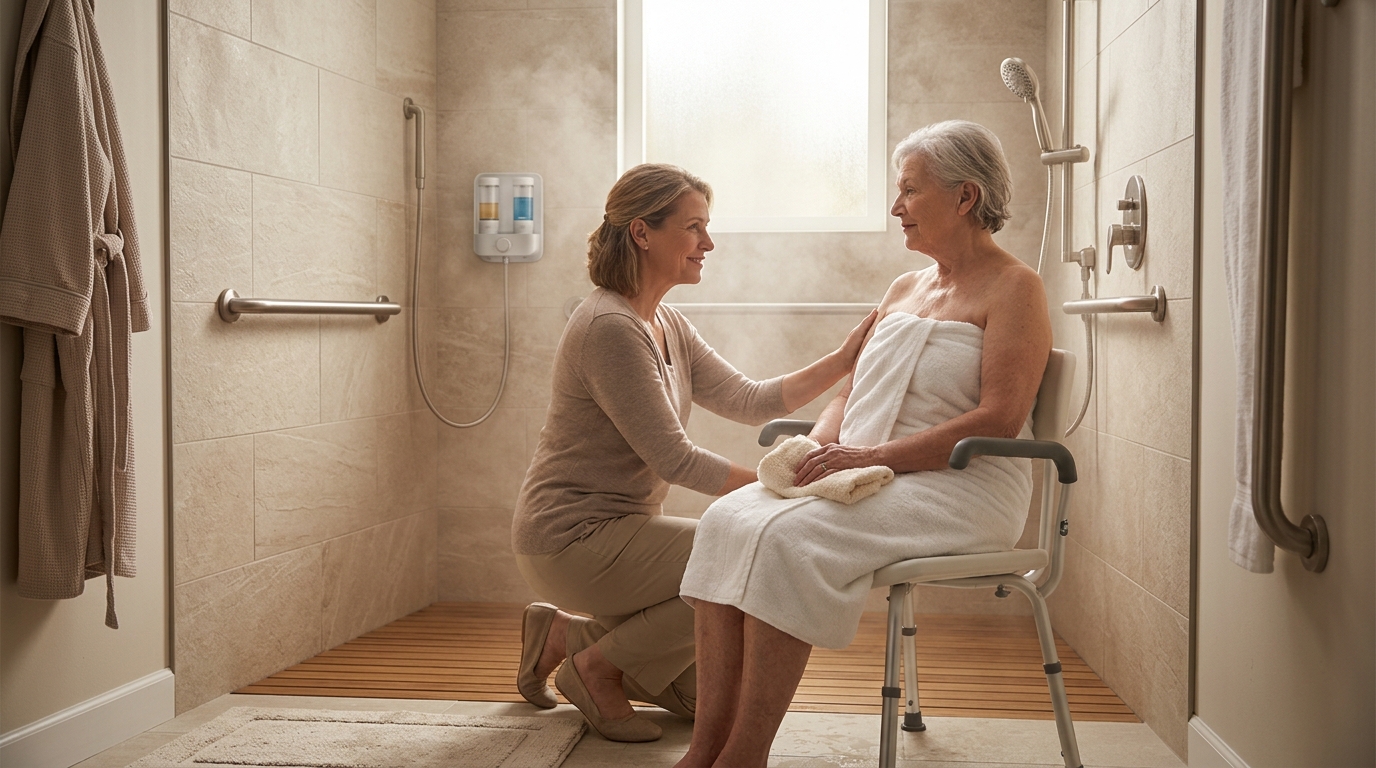
Stability is the foundation of a safe shower. For individuals with limited balance or leg strength, standing for the duration of a wash can be exhausting and dangerous. A shower chair is a critical piece of equipment that allows the individual to sit while washing, significantly reducing the risk of falls. When selecting a chair, caregivers should look for models with non-slip feet and a height that allows the user to keep their feet flat on the floor. This position provides a stable base and makes it easier for the caregiver to assist with washing without having to bend excessively.
Types of Shower Seating
There are several types of seating available, each suited to different mobility levels. Standard shower benches are simple and affordable, offering a flat surface for sitting. Shower chairs with backrests and armrests provide additional support for those who need help standing up or sitting down. For individuals with more complex needs, adjustable shower chairs that can be tilted or raised may be necessary. The choice of seating should always be made in consultation with the individual to ensure comfort and confidence.
Handheld Showerheads and Reach
Standard fixed showerheads can be difficult to use for people with limited reach or mobility. A handheld showerhead, attached to a flexible hose, allows the user or caregiver to direct the water flow precisely where it is needed. This is particularly useful for washing the back, legs, or feet without requiring the individual to twist or stretch. The flexibility of a handheld unit also allows the caregiver to assist with washing areas that are difficult to reach, reducing the physical strain on their own back and shoulders.
Choosing the Right Hose Length
The length of the hose is a practical consideration that is often overlooked. A longer hose provides more freedom of movement, allowing the user to wash their entire body without moving their position. However, a hose that is too long can become tangled or difficult to manage. Caregivers should test the hose length in the actual shower space to ensure it provides adequate reach without creating a tripping hazard. A handheld showerhead is a simple but effective modification that can make a significant difference in the ease and safety of the showering process.
Pre-Bathing Preparation and Environment
Preparation is key to a smooth and safe shower. Before the individual enters the bathroom, the environment should be checked for safety. This includes ensuring that the floor is dry and free of clutter, and that all necessary items are within easy reach. Slips and falls are a major risk in the bathroom, so removing any obstacles and adding non-slip mats can make a significant difference. The water temperature should also be tested before the individual enters, as sensitive skin or reduced sensation can make it difficult to judge the heat of the water.
Gathering Supplies in Advance
One of the biggest challenges in assisted showering is the need to manage multiple bottles and products. Caregivers should gather all necessary items, such as soap, shampoo, and towels, before the shower begins. This prevents the need to leave the bathroom or reach for items during the wash, which can disrupt the routine and increase the risk of accidents. Having everything ready in advance allows the caregiver to focus on the task at hand and provides a calmer, more predictable experience for the individual.
Preserving Dignity and Independence
Showering is a deeply personal activity, and maintaining dignity is a top priority for both the individual and the caregiver. The goal of assisted showering should be to support the individual's independence as much as possible, rather than taking over completely. This means allowing the person to do as much of the washing as they are able to do, and only stepping in to assist with specific tasks that are difficult or unsafe for them to perform alone. By respecting the individual's autonomy, caregivers can help preserve their sense of self-worth and confidence.
Communication and Consent
Open communication is essential for a positive showering experience. Caregivers should ask for the individual's preferences regarding the water temperature, the type of products used, and the level of assistance they want. This collaborative approach ensures that the routine is tailored to the person's needs and comfort. It also builds trust and reduces anxiety, which can make the entire process more relaxed and less stressful for both parties. Dignity is not just about privacy; it is about feeling in control of one's own body and daily routine.
Sponge Bath Alternatives and Adaptive Systems
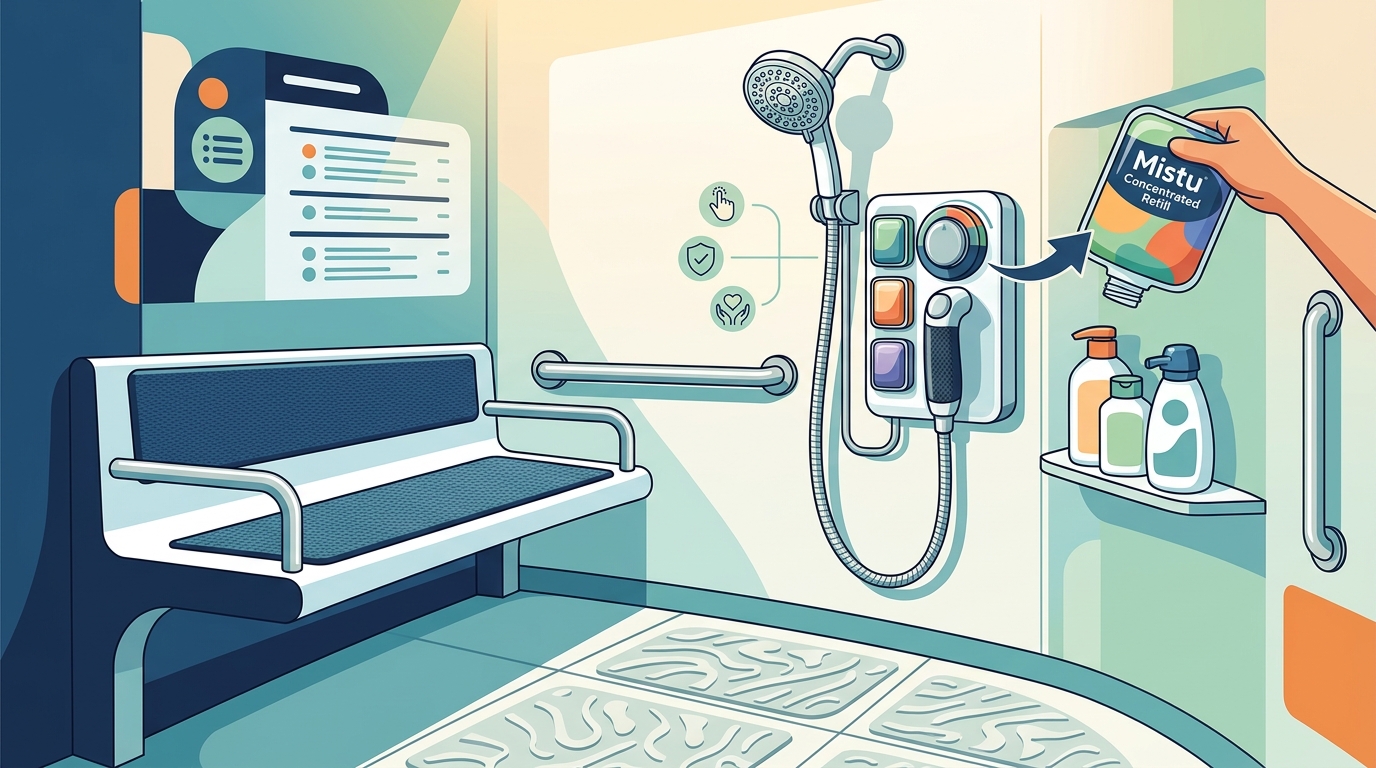
For some individuals, a full shower may be too physically demanding or unsafe. In these cases, a sponge bath or bed bath may be a more appropriate option. However, these methods can be time-consuming and physically taxing for the caregiver. Adaptive showering systems, such as the Mistu Shower Infuser, offer a middle ground that allows for a full shower experience with less physical effort. By infusing body wash or shampoo directly into the water stream, these systems remove the need to handle bottles, which is a common barrier for people with limited grip or mobility.
The Role of Adaptive Technology
Adaptive technology can play a significant role in making showering more accessible. Devices that simplify the process of applying products can reduce the physical strain on both the caregiver and the individual. For example, a system that delivers soap through the water allows the user to wash with a simple motion, without the need to squeeze or open containers. This not only makes the shower easier but also helps to preserve the individual's independence. When considering adaptive systems, it is important to choose products that are easy to install and maintain, and that fit seamlessly into the existing bathroom setup.
Key Takeaways
- Use a shower chair or bench to provide stability and reduce the risk of falls.
- A handheld showerhead with a flexible hose allows for better reach and easier washing.
- Prepare the bathroom environment in advance by removing clutter and testing the water temperature.
- Gather all necessary supplies before the shower begins to avoid interruptions.
- Respect the individual's dignity by allowing them to do as much of the washing as possible.
- Communicate openly about preferences and needs to create a comfortable and predictable routine.
- Consider adaptive systems like the Mistu Shower Infuser to reduce the physical strain of handling bottles.
- Regularly review the setup to ensure it continues to meet the individual's changing needs.
Frequently Asked Questions
What is the safest way to help a disabled relative shower?
The safest way is to use a combination of assistive equipment and careful preparation. This includes using a shower chair for stability, a handheld showerhead for reach, and non-slip mats for traction. Caregivers should also prepare the environment in advance and communicate clearly with the individual to ensure a smooth and safe process.
How can I reduce the physical strain on myself while assisting with a shower?
You can reduce strain by using ergonomic tools and techniques. A handheld showerhead allows you to direct the water without bending. A shower chair allows you to work at a comfortable height. Additionally, using a system like the Mistu Shower Infuser can eliminate the need to handle heavy or slippery bottles, which is a common source of strain.
Is a sponge bath a good alternative to a shower?
A sponge bath can be a good alternative for individuals who cannot safely use a shower. However, it can be time-consuming and physically demanding for the caregiver. Adaptive showering systems may offer a better option by allowing for a full shower with less physical effort.
How do I maintain my relative's dignity during a shower?
Maintain dignity by respecting their privacy and autonomy. Allow them to do as much of the washing as they are able to do, and only assist with tasks that are difficult or unsafe for them. Communicate openly about their preferences and ensure that the environment is comfortable and private.
What is a shower infuser and how does it work?
A shower infuser is a device that mixes body wash or shampoo directly into the water stream. This eliminates the need to handle bottles during the shower. The Mistu Shower Infuser, for example, allows the user to control the dilution level, providing a consistent and gentle wash without the physical effort of squeezing or opening containers.
How do I choose the right shower chair for my relative?
By implementing these strategies, family caregivers can make daily showering a safer, more dignified, and less stressful experience for their disabled relatives. The Mistu Shower Infuser is a valuable tool in this process, offering a simple and effective way to reduce the physical barriers that often make showering difficult. For more information on how to make your home more accessible, visit the Mistu website.