

7 Motion Sensor Features That Make Hands-Free Shower Systems Work
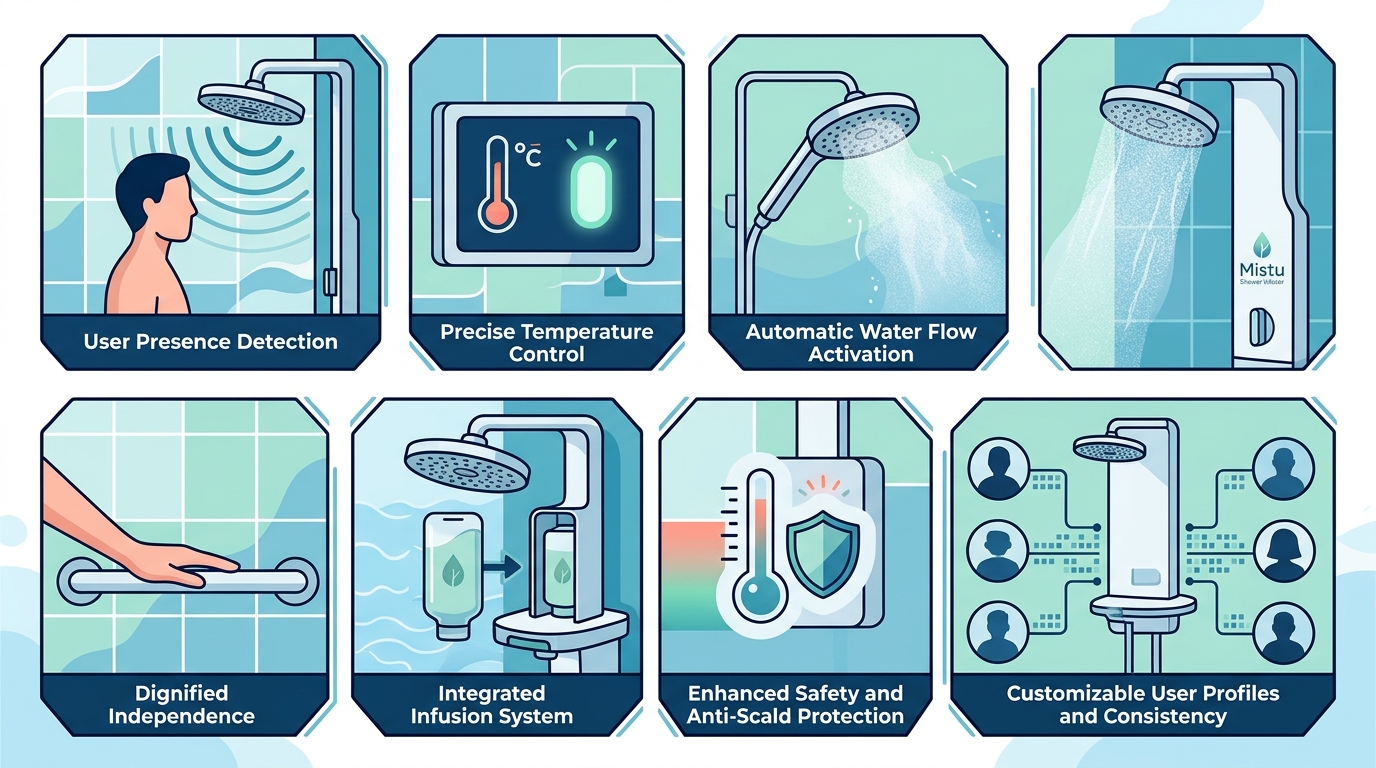
Hands-free shower systems rely on motion sensors to detect user presence and adjust water flow without physical interaction. For users with limited mobility, arthritis, or limb differences, these sensors are critical for maintaining independence and safety. Mistu Shower Infuser integrates these technologies to create a seamless, dignified bathing experience that removes the need for gripping or twisting controls.
1. Proximity Detection for Automatic Activation
Proximity detection allows the system to sense when a user enters the shower zone. This feature eliminates the need to reach for a handle or button to start the water. By using infrared or ultrasonic sensors, the system can distinguish between a person and static objects, ensuring the water only flows when needed. This reduces water waste and prevents accidental activation.
2. Dwell Time Sensing for Safety
Dwell time sensing monitors how long a user remains in the shower. If a user stays in the shower for an unusually long period, the system can trigger an alert or adjust the water temperature to prevent overheating. This is a vital safety feature for individuals with cognitive impairments or those who may experience fatigue during bathing. It provides peace of mind for caregivers and family members.
3. Fall Detection Integration
Fall detection algorithms analyze movement patterns to identify sudden drops or lack of movement. When integrated with a hands-free shower system, this feature can immediately notify emergency contacts or monitoring services. For users with balance issues or those recovering from surgery, this capability is essential for preventing serious injuries. It transforms the shower from a potential hazard into a monitored safe space.
4. Adaptive Flow Control
Adaptive flow control adjusts water pressure based on user movement and position. Sensors can detect if a user is standing still or moving, allowing the system to modulate the flow to match their needs. This ensures a comfortable experience without the user having to manually adjust the pressure. It is particularly helpful for those with limited grip strength who find traditional shower handles difficult to operate.
5. Temperature Stability Monitoring
Temperature stability monitoring ensures the water remains at a consistent, safe temperature. Sensors continuously check the water temperature and make micro-adjustments to prevent sudden changes. This is crucial for users with sensitive skin or those who may not feel temperature changes quickly. It prevents scalding and ensures a comfortable, predictable shower experience.
6. User Presence Verification
User presence verification confirms that the person in the shower is the intended user. Some advanced systems use biometric or specific motion pattern recognition to ensure the correct individual is using the facility. This is useful in shared living environments or healthcare facilities where multiple users may have different preferences. It allows the system to load specific settings for each user automatically.
7. Seamless Integration with Soap Dispensers
Seamless integration with soap dispensers ensures that cleansing products are delivered only when the user is present. Motion sensors can trigger the release of soap or shampoo in a controlled manner, preventing waste and mess. This is a key feature of the Mistu Shower Infuser, which infuses products directly into the water stream. It removes the need to handle bottles, making the entire process hands-free and efficient.
Choosing the Right Motion Sensor System
When selecting a hands-free shower system, prioritize sensors that offer both safety and convenience. Look for systems that integrate multiple features, such as fall detection and adaptive flow control, into a single unit. Ensure the system is compatible with your existing plumbing and that the sensors are easy to clean and maintain. For those seeking a comprehensive solution, consider systems like the Mistu Shower Infuser that combine accessibility with personalized care.
Frequently Asked Questions
Do motion sensor shower systems require electricity?
Most motion sensor shower systems require a power source to operate the sensors and control units. Some models are battery-operated, while others are hardwired. It is important to check the power requirements before installation to ensure compatibility with your bathroom setup.
Can motion sensors detect falls in a shower?
Yes, advanced motion sensors can detect falls by analyzing sudden changes in movement or lack of movement. These systems can send alerts to caregivers or emergency services, providing an added layer of safety for users with mobility issues.
Are hands-free shower systems suitable for people with arthritis?
Hands-free shower systems are ideal for people with arthritis, as they eliminate the need to grip or twist handles. Motion sensors allow users to control water flow and temperature without physical effort, reducing pain and strain during bathing.
How do I clean motion sensor shower systems?
Cleaning motion sensor shower systems is straightforward. Wipe the sensors with a soft, damp cloth to remove soap residue or water spots. Avoid using abrasive cleaners that could damage the sensor surface. Regular cleaning ensures accurate detection and reliable performance.
Can I customize the motion sensor settings?
Many hands-free shower systems allow users to customize motion sensor settings, such as sensitivity and response time. This enables users to tailor the system to their specific needs and preferences, ensuring a comfortable and safe showering experience.
Next Steps
Explore how the Mistu Shower Infuser System can transform your daily routine. Visit our Who is Mistu for? page to see if this solution fits your needs. For more details on installation, check out our Easy Install guide. You can also read real-life stories on our Customer Journeys page. To get started, for personalized advice.