
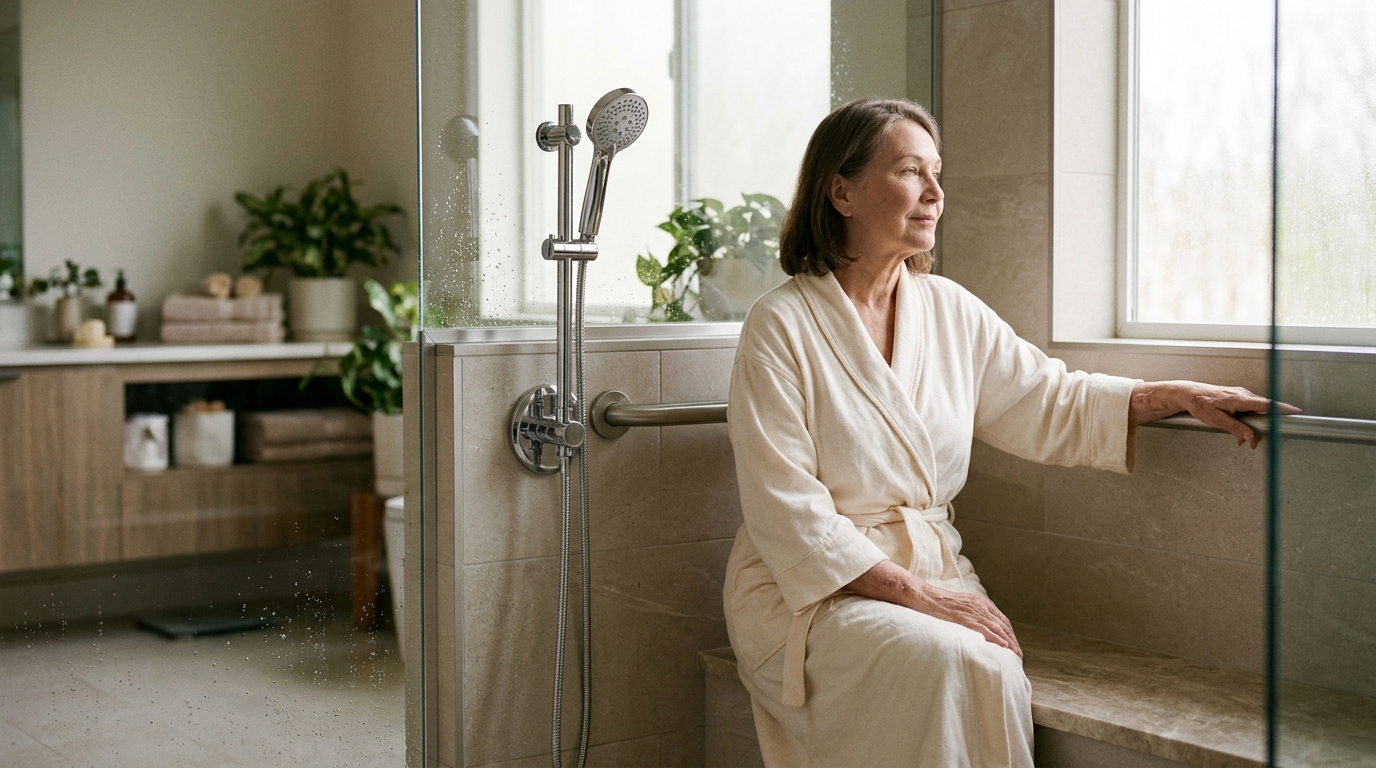
Showering becomes difficult when standard fixtures require gripping, bending, or balancing. The most effective bathroom changes for people with mobility challenges are those that remove physical barriers to movement and product handling. By installing stable support structures and simplifying the washing process, individuals can maintain their independence and safety. Mistu Shower Infuser addresses these needs by integrating accessibility directly into the shower stream, reducing the physical effort required for daily hygiene.
Structural Support and Fall Prevention
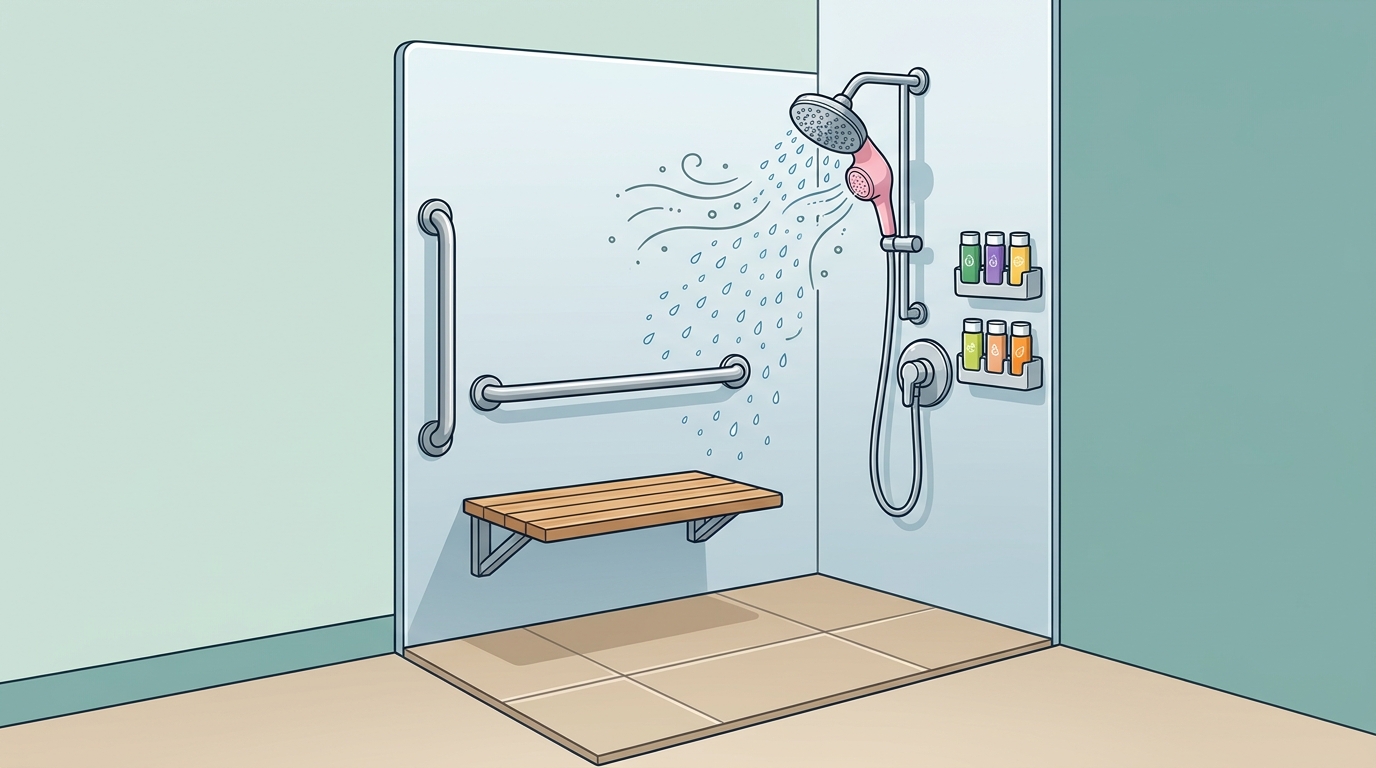
Slips and falls are a primary concern in wet environments. A shower chair is a foundational adaptation that allows users to sit while washing, significantly reducing the risk of losing balance. This simple change transforms the shower from a standing endurance test into a manageable seated routine. For those who stand, a sturdy grab rail provides a critical point of stability during transitions.
Positioning is just as important as the equipment itself. Rails should be installed at heights that allow for easy gripping without excessive shoulder strain. A non-slip mat or textured flooring adds another layer of safety by increasing friction underfoot. These structural changes do not require a full bathroom renovation, yet they dramatically improve confidence and physical security during the shower.
Simplifying Product Handling and Dispensing
Many standard bathroom fixtures assume full hand dexterity and strength. A shower infuser system is a device that blends cleansing products directly into the water flow, eliminating the need to hold, open, or squeeze bottles. This is particularly beneficial for individuals with arthritis, limb differences, or reduced grip strength. By removing the bottle from the equation, the user can focus entirely on washing and rinsing without managing slippery containers.
Traditional dispensers often require a firm squeeze or a twisting motion that can be painful or impossible for some users. When product delivery is automated through the water stream, the physical burden is removed. This approach supports dignity by allowing the individual to control the washing process with minimal physical input. It turns a potentially frustrating task into a smooth, continuous experience.
Optimizing Reach and Ergonomic Controls
Standard shower controls are often located at heights or positions that are difficult to access for people with limited range of motion. Adjustable shower heads on flexible hoses allow users to direct water to their specific needs without twisting their body. This flexibility is crucial for those who may have difficulty reaching their back or hair. Ergonomic handles on taps and valves can also make temperature adjustments less strenuous.
For users with specific limb differences, standard knobs may be too small or difficult to manipulate. Ergonomic controls offer larger, easier-to-grip alternatives that accommodate various hand shapes and strengths. These small adjustments can make the difference between a shower that feels like a struggle and one that feels effortless. The goal is to align the bathroom layout with the user's physical capabilities, not the other way around.
Enhancing Lighting and Visual Clarity
Good lighting is a critical but often overlooked aspect of bathroom accessibility. Shadows and glare can make it difficult to see water levels, obstacles, or changes in floor texture. Bright, even lighting reduces the risk of misjudging distances or stepping on wet spots. For individuals with visual impairments, high-contrast markers on the edge of the tub or shower base can provide essential visual cues.
Mirror placement and anti-fog treatments also play a role in maintaining spatial awareness. Being able to see one's surroundings clearly helps in planning movements and maintaining balance. These visual adaptations work in tandem with physical supports to create a comprehensive safety net. A well-lit bathroom is a safer bathroom, regardless of the specific mobility challenge present.
Integrated Solutions for Dignity and Independence
While grab rails and chairs are essential, they do not address the cognitive and physical load of managing multiple products. An integrated approach combines structural safety with simplified product delivery. The Mistu Shower System exemplifies this by combining a stable mounting system with a direct-infusion mechanism. This allows users to enjoy a consistent, gentle wash without the need for complex manual dexterity.
Independence is not just about moving safely; it is about maintaining control over one's personal care routine. When the shower environment is adapted to support both stability and simplicity, users can reclaim their privacy and confidence. This holistic view of bathroom changes ensures that the space supports the whole person, not just their physical limitations. It is about creating an environment where dignity is preserved and daily routines feel manageable.
Key Takeaways
- Installing a shower chair and grab rails are the most effective structural changes for preventing falls.
- Shower infuser systems remove the need to grip, open, or squeeze bottles, aiding those with limited dexterity.
- Adjustable shower heads and ergonomic controls improve reach and reduce physical strain during washing.
- Bright, even lighting and high-contrast markers enhance spatial awareness and safety.
- Integrated solutions that combine safety features with simplified product delivery support greater independence.
- Adapting the bathroom to the user's specific physical capabilities is more effective than forcing the user to adapt to the space.
Frequently Asked Questions
What is the most important bathroom change for fall prevention?
Installing a sturdy shower chair is often considered the most impactful change for fall prevention, as it eliminates the need to stand for extended periods.
How does a shower infuser help with mobility issues?
A shower infuser blends product into the water, removing the need to handle bottles, which is difficult for people with arthritis or limb differences.
Do I need to renovate my bathroom to make it accessible?
No, many effective changes like adding grab rails, non-slip mats, and adjustable shower heads can be installed without a full renovation.
Are standard shower heads suitable for people with limited mobility?
Standard heads may be difficult to maneuver. Adjustable heads on flexible hoses are generally better suited for users with limited range of motion.
Can these changes help with dignity and privacy?
Yes, by making the shower easier to manage independently, these changes help users maintain their privacy and confidence in personal care.
Conclusion
Creating a bathroom that supports mobility requires a thoughtful combination of structural safety and simplified functionality. By focusing on fall prevention, ergonomic controls, and integrated product delivery, individuals can transform their showering experience into one that is safe, dignified, and independent. Contact the Mistu team to explore how these adaptations can be tailored to your specific needs.