
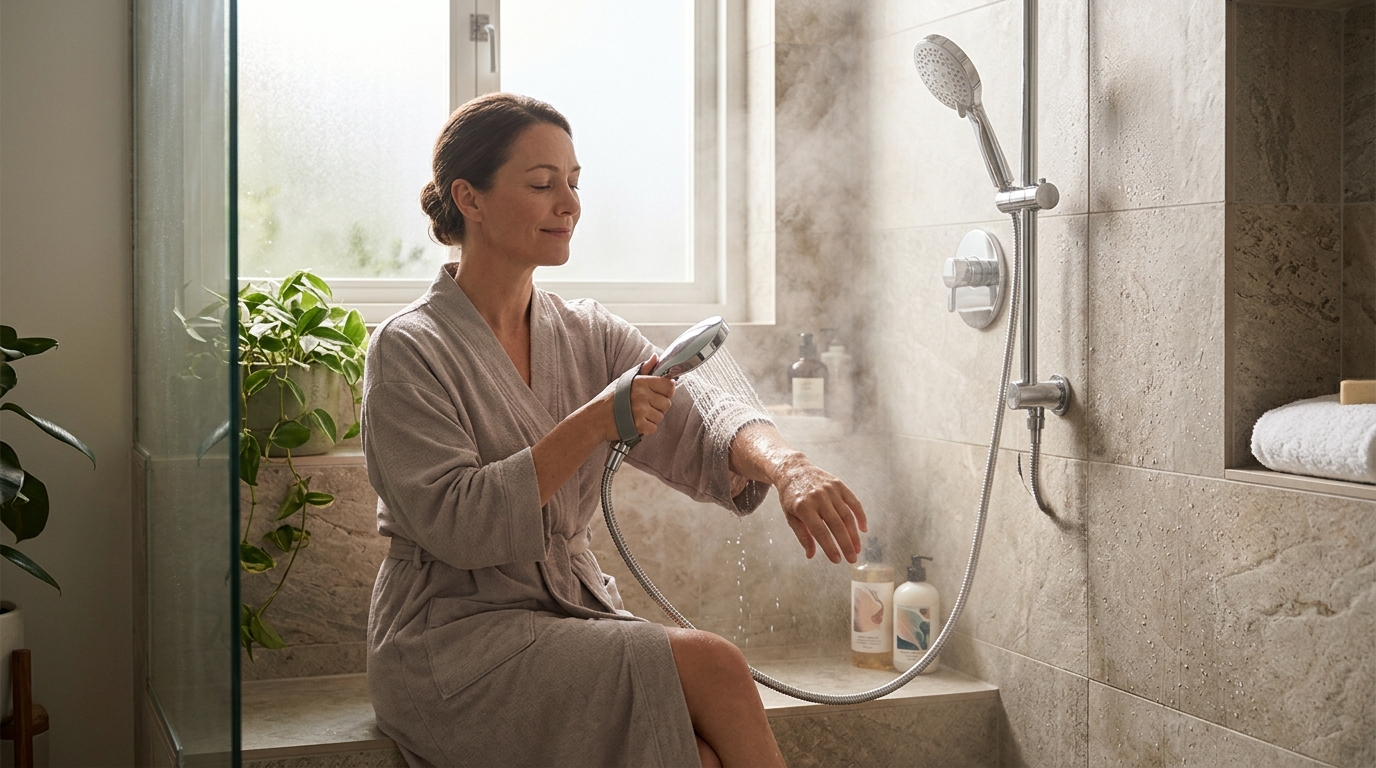
Handheld showerheads make showering easier by allowing users to direct water flow without requiring full arm extension or heavy gripping. They reduce the need to reach for fixed fixtures and can be paired with holders or straps to maintain balance. For individuals with limited arm mobility, this flexibility transforms a stressful routine into a manageable, independent task. according to Showering Barriers and
The Physical Challenges of Fixed Showerheads
Fixed showerheads are designed for average reach and strength. For people with arthritis, limb difference, or post-surgical restrictions, these fixtures often create significant barriers. A study on bathing challenges highlights that many wheelchair users transition to handheld systems because fixed heads limit their ability to clean themselves effectively. The primary issue is not just the water, but the mechanics of holding and aiming it. according to UNDERSTANDING CHALLENGES ADAPTIVE
When arm mobility is limited, lifting a heavy showerhead can cause pain or fatigue. Furthermore, maintaining a steady grip on a slippery, wet surface is difficult for those with reduced dexterity. This often leads to users avoiding certain body areas or rushing through their routine to minimize discomfort. The result is a less thorough cleanse and increased reliance on caregivers for assistance.
How Handheld Units Improve Accessibility
A handheld showerhead is a detachable nozzle that connects to the shower hose, allowing the user to move the water source freely. This design is critical for accessibility because it decouples the water flow from a fixed wall position. Users can bring the water to them, rather than moving their body to the water. This simple shift reduces the range of motion required for washing.
Many modern handheld units feature ergonomic handles that are easier to grip than standard fixtures. Some include adjustable flow settings that can be operated with minimal finger movement. For individuals with limited arm mobility, these features mean that the act of washing becomes less about physical struggle and more about personal care. The ability to pause the flow without turning off the main water supply also adds a layer of safety and control.
Strategies for Managing Grip and Reach
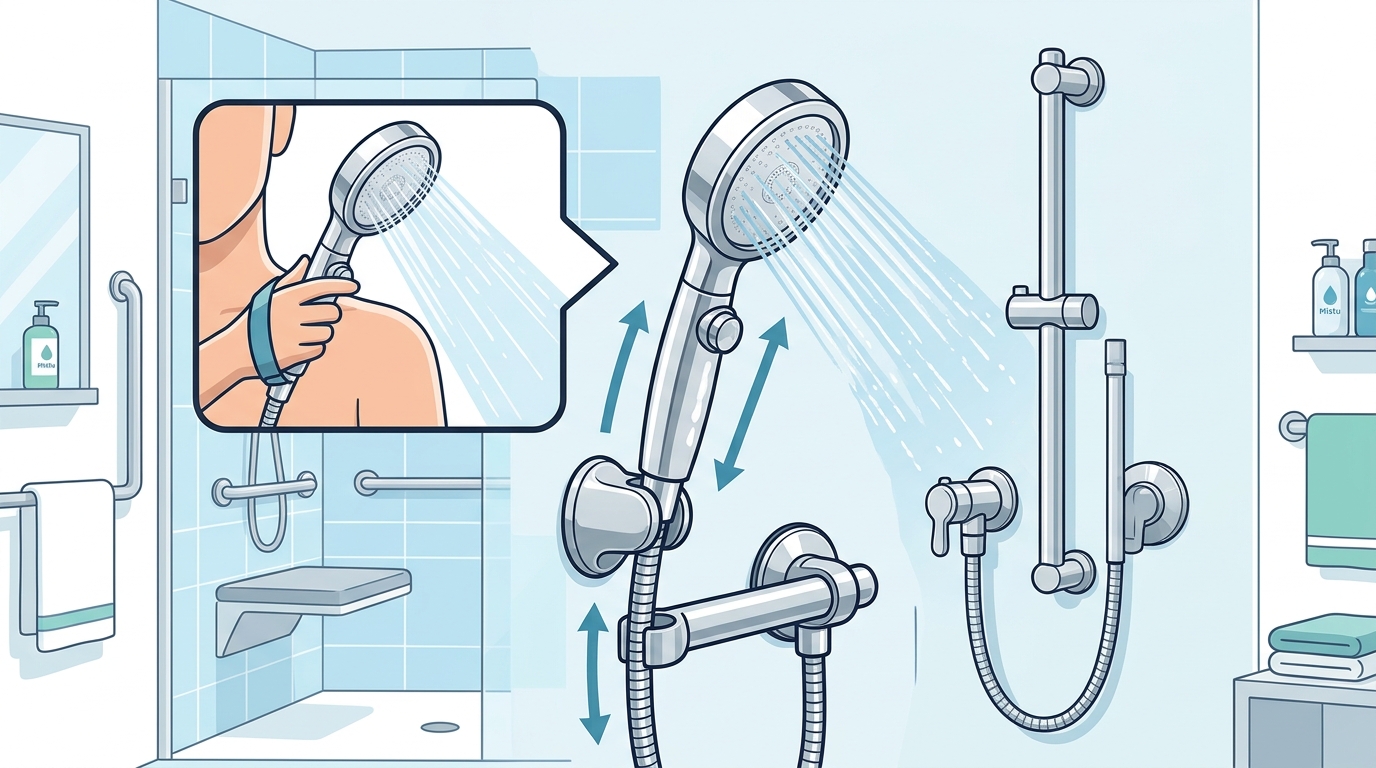
Even with a handheld unit, holding the showerhead for an extended period can be tiring. One effective strategy is the use of a shower wand holder or a suction cup mount. These devices allow the user to park the showerhead at a comfortable height when not in use. This eliminates the need to constantly lift and lower the unit, saving energy for the actual washing process.
Another approach involves using a strap or lanyard to keep the showerhead within reach if it is dropped. For those with very limited grip strength, adaptive tools such as reachers or bathing wands can be attached to the handheld unit. These extensions allow the user to direct water to hard-to-reach areas without twisting the wrist or shoulder. Combining a lightweight handheld head with these adaptive accessories creates a highly customizable showering setup.
Integrating Product Delivery with Handheld Systems
For users with limited arm mobility, the combination of a handheld showerhead and an in-shower product delivery system creates a seamless routine. The user can direct the water with the handheld unit while the cleansing agent is already mixed into the flow. This integration reduces the number of steps involved in showering, thereby lowering the risk of fatigue and slips. It allows the individual to focus on comfort and dignity rather than managing multiple objects.
Safety Considerations for Wet Environments
Slips and falls are a major concern in bathrooms, particularly for those with mobility limitations. A handheld showerhead can contribute to safety by allowing the user to remain in a stable position, such as sitting on a shower chair, while washing. The ability to direct water without moving the body reduces the need for awkward shifts in weight. However, the shower floor itself must be non-slip, and grab bars should be installed within easy reach.
It is also important to consider the weight of the showerhead. Heavy units can strain weakened muscles, so lightweight options are preferable. The hose length should be sufficient to allow the user to reach all necessary areas without stretching. By carefully selecting a lightweight handheld unit and pairing it with appropriate bathroom adaptations, users can create a safer and more independent showering environment.
Key Takeaways
- Handheld showerheads allow users to direct water flow without full arm extension, reducing physical strain.
- Fixed showerheads often create barriers for those with limited mobility, leading to incomplete cleansing or reliance on caregivers.
- Ergonomic handles and adjustable flow settings on handheld units can significantly improve ease of use.
- Using holders or straps helps manage the showerhead, saving energy and preventing drops.
- Combining a handheld showerhead with an in-shower product delivery system like Mistu removes the need to handle bottles.
- Safety adaptations, such as non-slip floors and grab bars, are essential when using handheld units.
- Lightweight showerheads are preferable for users with reduced grip strength or muscle fatigue.
Frequently Asked Questions
Do I need a special hose for a handheld showerhead?
Most standard shower hoses are compatible with handheld showerheads, but it is important to check the thread size. Some specialized units may require a specific hose length or type to ensure proper water pressure and flexibility.
Can I use a handheld showerhead if I have no arm mobility at all?
If you have no arm mobility, a handheld showerhead may still be useful if it is mounted in a holder or operated by a caregiver. For full independence, you might consider a system that infuses products into the water, reducing the need to handle any objects.
How do I prevent my handheld showerhead from falling?
Use a suction cup holder, a wall-mounted bracket, or a lanyard strap. These accessories keep the showerhead within reach and prevent it from hitting the floor if released.
Are handheld showerheads better for people with arthritis?
Yes, they are often better because they reduce the need for gripping and twisting. Look for models with ergonomic, non-slip handles that are easy to hold with stiff or painful joints.
Can I use shampoo with a handheld showerhead?
You can use shampoo, but handling the bottle can be difficult. An in-shower infuser system can mix the shampoo into the water, eliminating the need to hold a bottle while using the handheld unit.
What is the best height for a handheld showerhead holder?
The holder should be at a height where you can comfortably reach the showerhead without stretching or bending. This often aligns with the height of a seated user or a standing user with limited reach.