
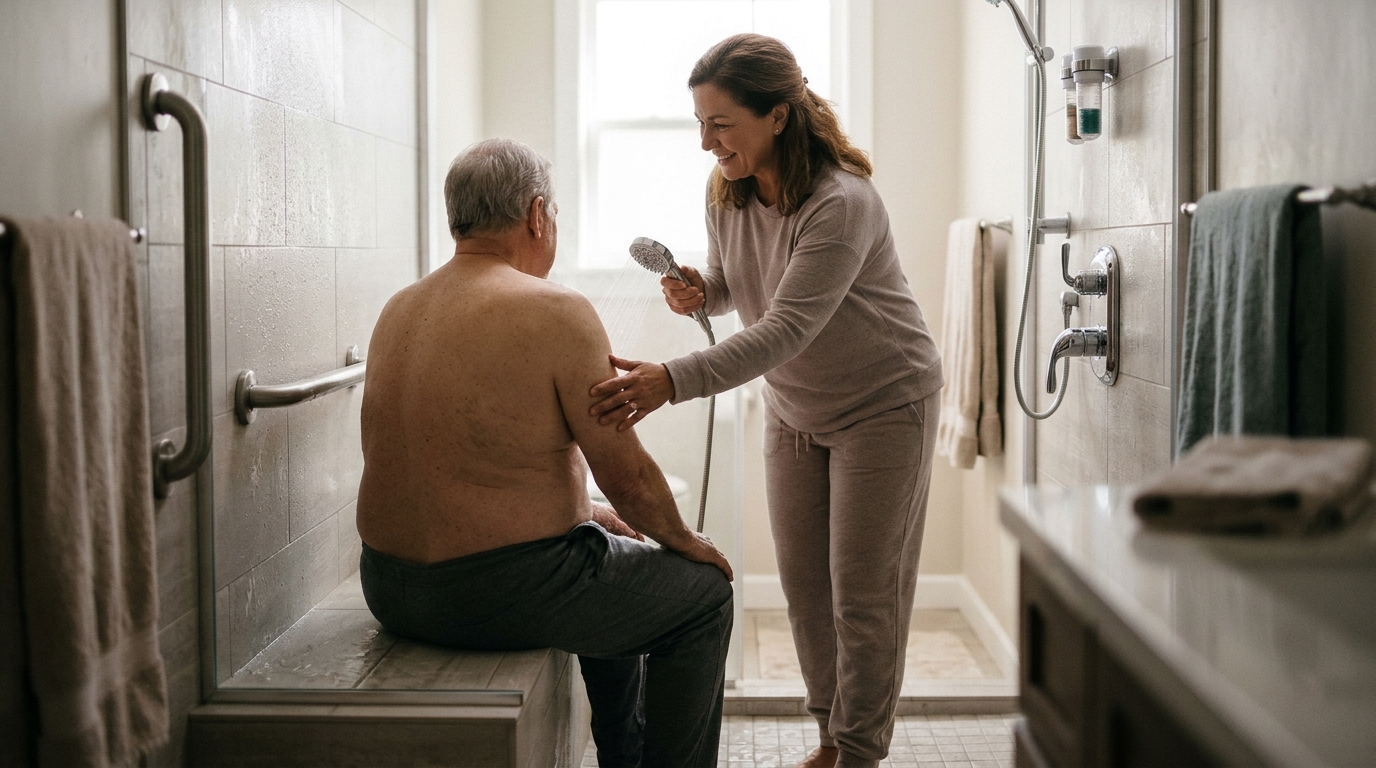
Showering is a high-risk activity for individuals with limited mobility, and caregivers often face physical strain during assistance. Bathroom safety features are specific modifications and devices designed to reduce fall risks and physical effort. For caregivers, the priority is selecting equipment that minimizes the need for lifting, steadying, or awkward reaching. This guide outlines the essential safety features that make showering safer and more dignified for both the person receiving care and the caregiver.
Reducing Physical Strain with In-Shower Delivery Systems
One of the most common sources of injury for caregivers is the repetitive motion of lifting and steadying a person while they wash. Traditional showering requires the caregiver to manage bottles, reach for products, and support the individual's weight simultaneously. This combination of tasks increases the risk of back, shoulder, and joint strain. An in-shower delivery system, such as the Mistu Shower Infuser, addresses this by infusing cleansing products directly into the water stream. This feature removes the need to handle slippery bottles or squeeze dispensers, allowing the caregiver to focus solely on safety and support. By eliminating the product-handling step, the physical workload is significantly reduced, making the routine more sustainable for long-term care.
Enhancing Stability and Fall Prevention
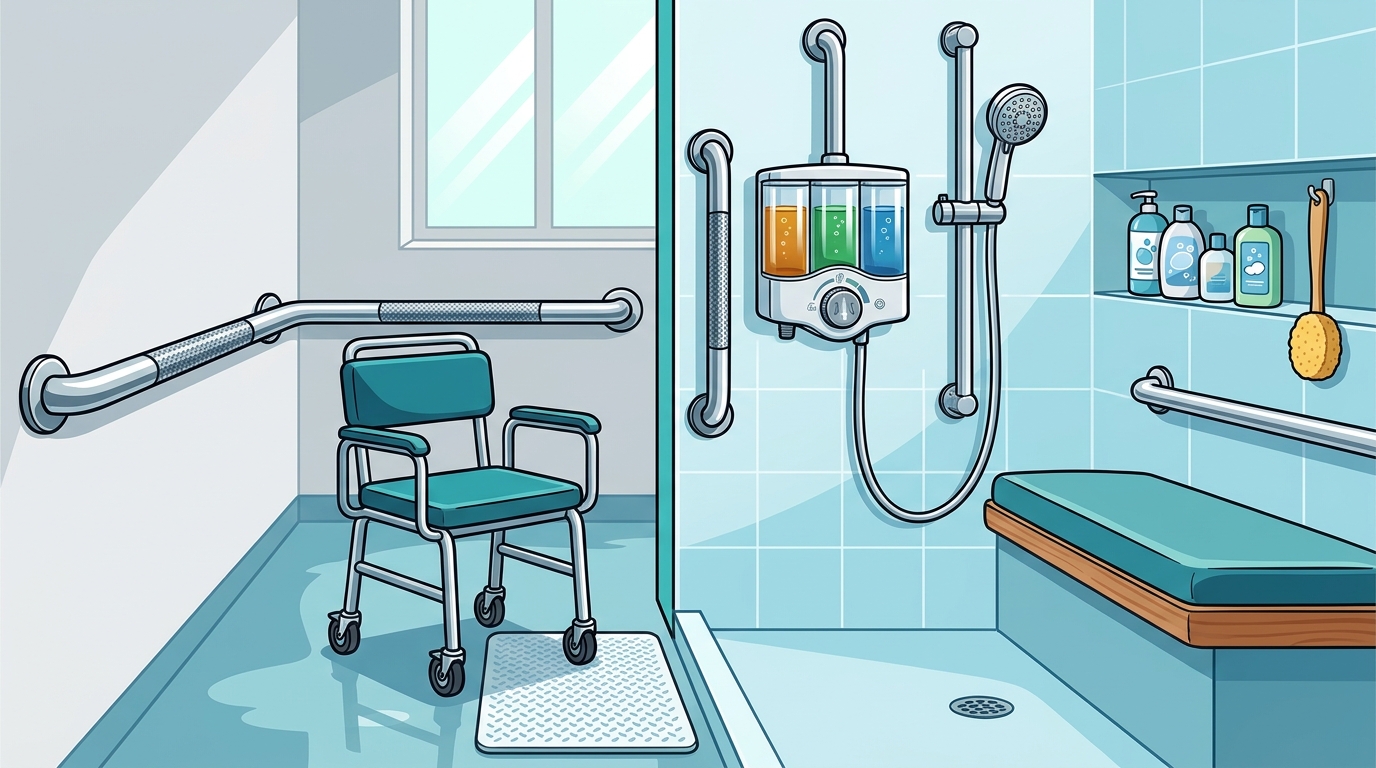
Slippery floors and wet surfaces are the primary environmental hazards in a bathroom. Caregivers must be aware of features that enhance stability for the individual, which in turn reduces the need for constant physical support. Non-slip mats and textured flooring are basic but critical first steps. However, structural features like grab rails and shower seats provide more reliable stability. A shower seat allows the individual to sit while washing, which drastically reduces the risk of falls. When the person is seated, the caregiver does not need to brace themselves against the wall to prevent a collapse. This change in posture transforms the dynamic from a high-risk balancing act to a more controlled and stable interaction. The showering for people with mobility issues page highlights how reducing movement and reach directly correlates with improved safety outcomes.
Improving Dignity and Privacy in Care Routines
Safety is not only about preventing falls; it is also about preserving the dignity of the person receiving care. When a caregiver must physically assist with every step of washing, including applying soap and rinsing, the process can feel invasive and embarrassing for the individual. Features that promote independence help maintain a sense of privacy. For example, a system that allows the user to control their own washing reduces the need for the caregiver to be hands-on during intimate parts of the routine. The caregivers and family section emphasizes that preserving dignity is a core benefit of accessible design. When the individual can manage their own cleansing, the caregiver can step back, offering support only when necessary. This shift improves the emotional quality of the care relationship and reduces the stress associated with intimate assistance.
Optimizing Ergonomics for Caregiver Health
Caregiver health is a critical factor in the sustainability of home care. Repetitive strain injuries are common among those who assist with daily living activities. Bathroom safety features should be evaluated from the caregiver's perspective as well as the user's. Ergonomic controls on shower devices can make a significant difference. For instance, a lever or button that is easy to operate with one hand or minimal grip strength reduces the physical effort required. The Mistu Shower Infuser system includes optional ergonomic controls designed to support users with limited grip or dexterity. These features allow the caregiver to assist with setup without having to perform the fine motor tasks themselves. By choosing equipment with intuitive, low-effort controls, caregivers can protect their own physical health while providing effective support.
Integrating Safety Features into Daily Routines
Implementing bathroom safety features requires a thoughtful approach to the daily routine. Caregivers should assess the specific needs of the individual, considering factors like balance, strength, and cognitive ability. A combination of features often works best. For example, pairing a shower seat with an in-shower delivery system creates a comprehensive safety net. The seat provides stability, while the delivery system reduces the need for reaching and handling products. This integrated approach ensures that the routine is both safe and efficient. The who is Mistu for page provides insights into how different users benefit from these integrated solutions. By tailoring the setup to the individual's needs, caregivers can create a routine that is less stressful and more predictable. This predictability is key to reducing anxiety for both the caregiver and the person receiving care.
Key Takeaways
- In-shower delivery systems reduce the need to handle bottles, lowering physical strain on caregivers.
- Shower seats and grab rails are essential for preventing falls and reducing the need for constant physical support.
- Preserving dignity is a safety feature; allowing individuals to manage their own washing reduces the invasiveness of care.
- Ergonomic controls on shower devices protect caregiver health by minimizing fine motor tasks and awkward movements.
- Integrating multiple safety features, such as seating and product delivery, creates a more comprehensive and effective routine.
- Assessing the specific needs of the individual is crucial for selecting the right combination of safety features.
Frequently Asked Questions
How does an in-shower delivery system help caregivers?
An in-shower delivery system infuses cleansing products directly into the water, removing the need to handle bottles. This reduces the physical strain on caregivers by eliminating the tasks of lifting, squeezing, and reaching for products during the shower.
What are the most important bathroom safety features for fall prevention?
The most important features for fall prevention include non-slip flooring, grab rails, and shower seats. These structural modifications provide stability and reduce the risk of slipping on wet surfaces.
Can bathroom safety features improve the dignity of the person receiving care?
Yes, features that promote independence, such as in-shower delivery systems, allow the individual to manage their own washing. This reduces the need for hands-on assistance, preserving privacy and dignity.
Are ergonomic controls necessary for shower safety?
Ergonomic controls are not strictly necessary for safety, but they significantly reduce the physical effort required to operate the shower. This is particularly beneficial for caregivers and individuals with limited grip strength or dexterity.
How should caregivers choose the right safety features?
Caregivers should assess the specific needs of the individual, considering factors like balance, strength, and cognitive ability. A combination of features, such as seating and product delivery, often provides the best results.
Conclusion
Selecting the right bathroom safety features is essential for creating a safer and more dignified showering experience. By focusing on reducing physical strain, preventing falls, and preserving independence, caregivers can improve the quality of care for both themselves and their loved ones. The Mistu Shower Infuser offers a practical solution for addressing the challenges of product handling and physical effort. To explore how these features can be integrated into your care routine, visit the contact page to speak with our team.